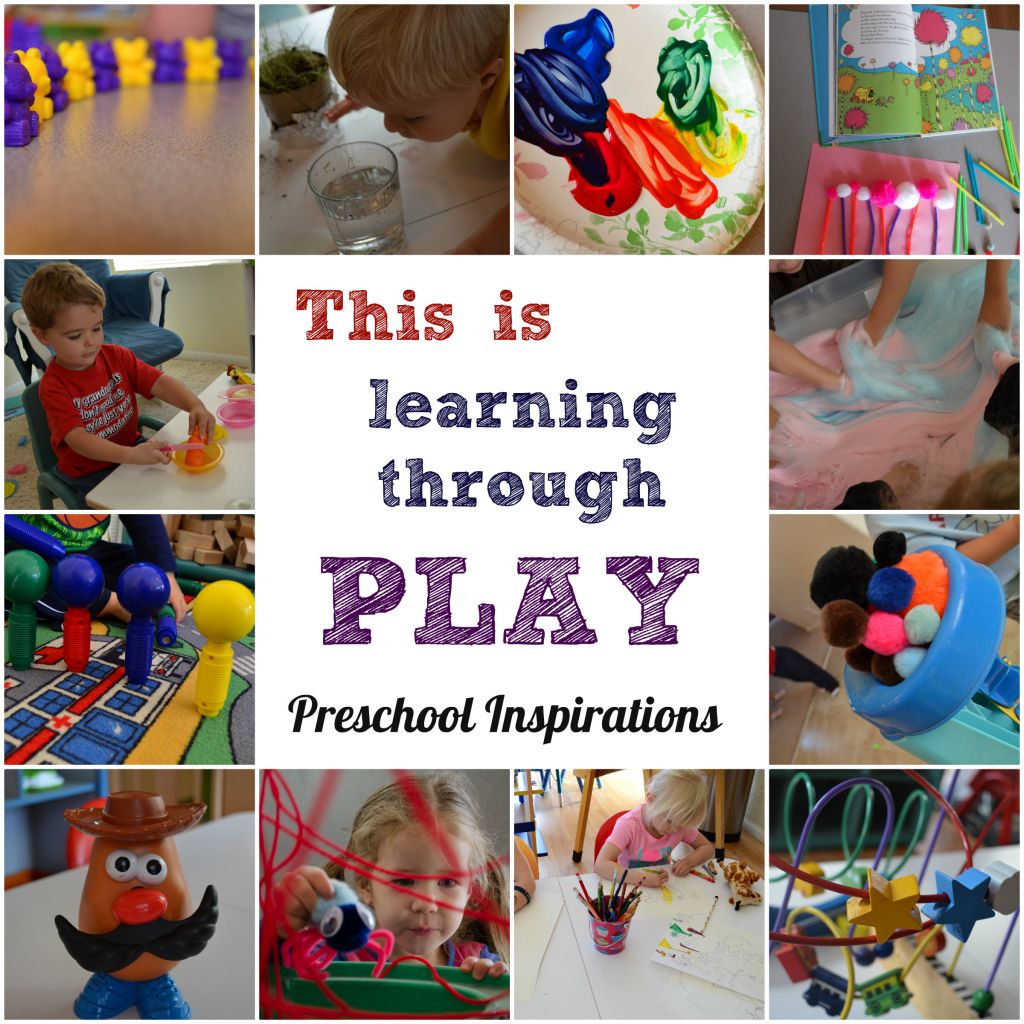
Primarily, play is:
1. self-chosen & self-directed;
2. process rather than product driven;
3. contains structures or rules established by the players themselves;
4. imaginative, non-literal & removed from reality;
5. occurs between those who are active, and non- stressed.
(Gray, 2013; Brewer, 2007)
'Teaching' through play
A common misunderstanding about Play-Based Learning:
Learning-though-Play + Limited/ No Adult Guidance
- Teaching through play incorporates adult-scaffolded learning objectives but remains child-directed
- When teaching through play teachers might: enhance children's exploration and learning by commenting on their discoveries, co playing along with the children, asking open ended questions about what the children are finding, exploring the materials in ways that children might not have thought to do.
The role of the teacher: Intentional teaching
- Achieving a balance between direct instruction
- Act with knowledge and purpose to ensure children acquire the knowledge and skills they need to succeed in school and life
- Makes decisions that reflect their desire to specific goals or outcomes for their students' development and learning.
Intentional teaching: More than teacher talk
Requires teachers to have significant and wide-ranging of their students, both developmentally and cognitively
Zone of proximal Development
Pianta defines intentionality as " directed, designed interactions between children and teachers in which teachers purposefully challenge, scaffold, and extend children's skills" (2003, P.5).
Learning ->->->->->->->->->->->->->->->->->->->->->->->->->->->->->->->->->->->->->->->->->
- What is known;
- skills too difficult for a child to master on his own, nut can be done with guidance and encouragement from a knowledgeable person;
- What is known
Respect students and know when to ask questions. When learners don't want to be interrupted leave them alone. "In outstanding classrooms teachers do more listening than talking and students do more talking than listening. Terrific teachers often have teethmarks on their tongues." Alfie Kohn
The classroom is rich in opportunities for children to develop a body of knowledge that is inclusive of emotional socialisation.
Teaching the Key Competencies through play (in a cycle)
- Identify skills to be taught
- Plan for explicit teaching of skills
- Model skill to class (with puppet or students)
- Children practice the skill with peers
- Teacher coaches skill during play based learning
The power of positive descriptive feedback
Commentary during play that describes the students's pro-social behaviours and learning activities.
Description of task: You pointed to the square
Link to learning: You pointed to the square - You are learning your shapes
Link to effort: You are trying hard to find all the squares
Teaching children to problem-solve
Social problem-solving is the ability to find an effective solution to a social conflict.
1. identify what the problem is
2. think about why it may have occurred
3. brainstorm solutions to the problem
4. think about and evaluate the consequences for each solution if applied
5. decide on a solution to try
6. implement their plan to solve their problem
Intentionally teach social problem-solving approaches
How do you lift the play in your room?
Low-level play eg. children colouring or cutting paper, gluing and/or 'making' things at the making table
High-order play eg. children colouring or cutting paper, gluing or making 'props' that they then use in a socio-dramatic game
What the role of the teacher is and what it is not
What the teacher does:
- Use phrases during roving through the classroom such as 'I wonder', 'maybe' and 'you might like to'
- Plans for intentional teaching of rules and expected behaviours, recognising when play is not occurring and a redirection is required
What the teacher does not:
- Question children in their play such as 'John what are you playing?' and 'Mary, why did you decide to make that?'
- Allow for play to become 'loose' and chaotic' - disregarding the rules and expected behaviours in the classroom. Be unavailable to coach expected behaviours occurring in the context of the play.
Teaching through play: In summary
The most effective professional learning occurs with significant and ongoing support
Features and formats of a learning story
Features
- narrative
- talking directly to the student
- can be shared
Format
- varied
where possible may include student quotation and 'direct speech'
- must include photos
What next
- what do you see as a challenge in implementing Learning stories in your classroom

No comments:
Post a Comment